
The power of our words is something that is overlooked as much as the single bag of peas that has sat in my freezer for the past five years. Over this semester, the idea that impact matters more than intentions has been continually reinforced. ‘You really shouldn’t eat that cookie,” may be a remark used to reinforce an idea to eat healthier, but it can be interpreted as “damn, you should really think about losing weight.” This may be an exaggerated example, but it clearly describes the dilemma. I understand that there is a consensus that our generation is too fragile or sensitive–sometimes I agree–but I also see it as our generation is seeking kindness and inclusion.
This semester, I was trained and educated on diversity and implicit bias for my Peer Mentor position. In a growing world of personalities and cultures, it is important to not or microaggressions get the best of us. Statements like “oh, you don’t look gay” or “wow, you speak English really well” might seem innocent, but is perceived as ignorant. It is important to remain accountable for your words and actions and own up to the hurt you caused, intended or not.
It may also be important to note that cultural appropriation is another significant issue we face during the battle of inclusion. Cultural appropriation is when cultural characteristics are adopted without fully understanding or respecting them. An example of this is common during Halloween. Costumes like a Native American ‘Pocahottie’, gypsies, or even the Mexican stereotype of a sombrero, mustache, and poncho can be seen as offensive to that specific culture. Coachella can also be a breeding ground for appropriation. For example, cornrows and box braids were distinguished as a new festival trend, despite the fact that these have been the hairstyle of black women for centuries. This in hindsight, emphasizes the idea that cultural identities like these are only acceptable when not worn by the original creators. In matters like these, it is crucial to show cultural appreciation rather than cultural appropriation. The overall moral of this semester is just to think before you do or say: actions and words speak louder than you believe.
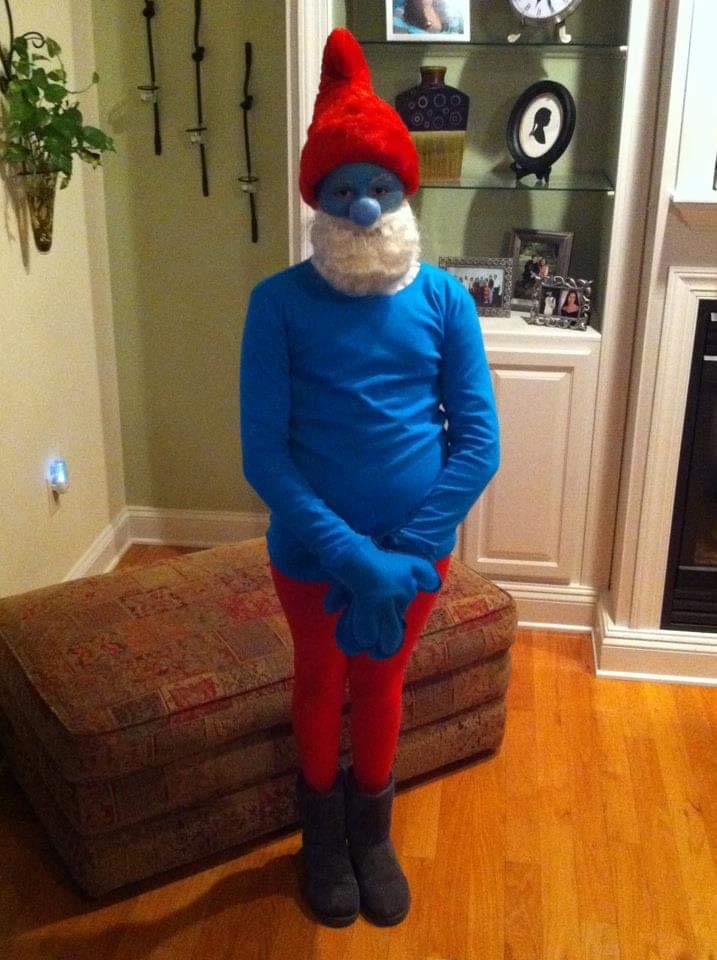
This is a picture of my Halloween costume circa 2010.
 English 110 Spring 2020 10:10-11:00
I like that even though your writing was succinct, you were able to get the point across and even include some examples to help. It’s really cool you had training on diversity and implicit bias to help you shed some light on these problems. Implicit bias reminds of taking COMM212 over winter where we had a lecture on implicit bias and how that can effect us and how we see other people. It plays a bigger part in our day to day lives than we may realize.
-Madison Gac
LikeLike
I love the way you started this piece. The little tid bit about your timeless bag of peas is not only relatable but sensible which really brings in the attention. As for what you wrote about, it is actually funny because i was just talking about this same phenomenon with my friend group. Unintended consequences are such a huge problem and always have been in all societies because only probably less than 20% of the population really thinks before they speak and realizes the impact that words have on a persons psyche. You really brought this up in a very well worded concise piece which brings attention to the issue. Wonderful work!
i hope you are doing well and good luck with finals. Have a great summer 🙂
-caroline erlandsen
LikeLike
This was such an interesting piece to read. I absolutely loved how you addressed aspects of our society that many people are afraid to talk about. The idea of our generation being too fragile is something I hear much too often and you could not have said it better “I also see it as our generation is seeking kindness and inclusion.” Many other generations see this as a weakness when really it is a strength of ours. Thank you for sharing this piece and talking about some hard topics.
-Riya Moorthy
LikeLike