
Toni Abdy
Professor Freeman
English 110
“I’ll be over in twenty minutes, let’s watch a scary movie,” I reply to my boyfriend, looking forward to a night of nothing but relaxation and staying cozy. “You guys can come over to my house and we can order food,” my friend insists as we are eager to see each other’s faces after a long fall semester. “Okay, we will come up tomorrow to see the baby,” my dad informs my cousin as we sit on edge with excitement to see his newborn baby boy. Perhaps you cannot relate to these exact statements precisely, but to some degree I am sure you can reflect on similar instances. These are words, bits of conversations that were part of our reality just a few months ago. These are words, bits of conversations which will not be a part of our reality for the foreseeable future. Sometimes I have to remind myself of the world we are currently living in — a world negatively impacted by the ever so powerful coronavirus pandemic, a world turned upside down, a world where we are continuously searching for answers that can only be answered on a day by day basis, and in regard to the time things do begin to normalize, we have to ask ourselves now, “how will we change the way we live going forward?”
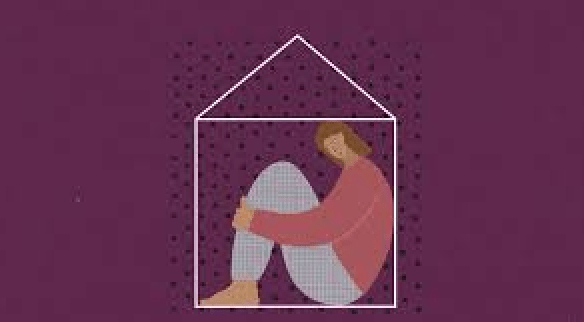
A new challenge presented itself the moment students were sent home from school, public places were shut down, and social distancing guidelines were implemented. Social distancing is the safest way to slow the spread of coronavirus as we have been informed by governors and scientists across the country, and while it is leading to detrimental effects of the economy and lives of thousands of individuals, do we ever stop to think about the detrimental effects to mental health? This question is not asked to undermine the loss of financial stability and innocent lives across the nation, but rather to allow for reflection of the mental states not only of ourselves, but the ones we love.
We are in the dark regarding how long we will be socially distancing, and if this current norm continues over a long period of time, an upward risk for heart disease, dementia, depression, and unfortunately death could present itself (Greg Miller, 2020). These risks seem unimaginable when related to social distancing, something that realistically speaking doesn’t seem that challenging, right? Truthfully, social distancing has had an immense impact on those suffering in mental aspects. “On the one hand, I am concerned that this will not only exacerbate things for those who are already isolated and lonely, but also might be a triggering point for others to now get into habits of connecting less,” according to one of Brigham Young’s University research psychologists Julianne Holt-Lunstad (Greg Miller, et al.,2020). As someone who struggles with anxiety and body image, being isolated in my home to sit with the stress of my family and my own thoughts has left me feeling more unhappy than not some days.
I’ve noticed not only in terms of myself, but of others around me, the lack of social connection has allowed for my emotions to get the best of me. Especially in the beginning of quarantine, I found myself crying and becoming more easily stressed than I usually would, which is saying a lot. About a month ago, I recall having a conversation with my friend from school, saying how difficult it was when the things that are our outlets, our distraction from stress, aren’t at our fingertips. Simon Riego, chief psychologist at Montefiore Health System and associate professor of psychiatry and behavioral sciences at Albert Einstein College of medicine in New York supported the nature of my conversation, stating, “Not going to work, school, social events, or the gym means lacking “social rhythm reinforcers” and causing stress”, and further explained, “the removal of those things that normally lift our mood — like connecting with others, feeling we had a good productive day, getting out and exercising, moving about — when you take those things away … it can potentially have an impact on people’s mood” (Anna Miller, 2020).
In the midst of this pandemic, it is important to remind ourselves how we can feel better throughout our days, instead of dwelling on the tasks or activities we cannot do because of implemented guidelines. While we ourselves may be living in fear, becoming frustrated, or lacking compassion, there is always a way to look at things in a more positive light. Simply reaching out to family members, close friends, and others we care about can go a long way. You never know what someone is going through, and now is most definitely not safe to assume someone is okay. The weather is warmer, and at least for myself, physical exercise is extremely important not only as a way to feel better, but to refill the void of being without a strict daily routine (Wei, 2020).
As I have said to those close to me, some people handle this ordered confinement better than others. Whether an individual suffered in aspects of mental health prior to quarantine, or began to find themselves losing control of their mental state and emotions because of it, we have to remember that everyone handles stress differently. The way people cope with remaining in quarantine could relate to a number of reasons including current mental health state, how you deal with stress, and your personality (Cherry, 2020).
Everyone is dealing with things differently, and something we have to remember is the necessity for strong mental health. Be productive, reach out to someone you’re worried about, be open, and do whatever it takes to remain healthy and safe. What does our near future look like? What does the long term hold? Truthfully, we would all like to resume our regular social contact with others, engage in face to face conversations, make plans with friends, live what we know to be “normal.” We have a new normal for now, and even when it begins to break down I believe we will find ourselves living out some form of social distancing for a longer time period, taking precaution in our daily routines. We don’t know if a second wave will come, and quite frankly the only thing we do know is that everything we question has no definite answer. Time will tell what happens next, and more than anything I want it to resume normal living. The other thing I hold true certainty with is that staying positive, calm, and head strong is crucial.
Works Cited
Cherry, Kendra. “How Does Quarantine Affect Your Mental Health?” Verywell Mind, Verywell Mind, 18 Mar. 2020, http://www.verywellmind.com/protect-your-mental-health-during-quarantine-4799766.
Miller, Anna Medaris. “The Psychology of Why You Go Stir-Crazy, and How to Cope.” Business Insider, Business Insider, 1 May 2020, http://www.businessinsider.com/how-a-coronavirus-quarantine-affects-your-body-and-brain-2020-3.
MillerMar, Greg, et al. “Social Distancing Prevents Infections, but It Can Have Unintended Consequences.” Science, 16 Mar. 2020, http://www.sciencemag.org/news/2020/03/we-are-social-species-how-will-social-distancing-affect-us#.
Wei, Marlynn. “New Research on Stress of Quarantine and 5 Ways to Feel Better.” Psychology Today, Sussex Publishers, 31 Mar. 2020, http://www.psychologytoday.com/us/blog/urban-survival/202003/new-research-stress-quarantine-and-5-ways-feel-better.
 English 110 Spring 2020 10:10-11:00
I truly enjoyed reading this post. I respect how open and honest you are throughout every blog. You aren’t afraid to say things that other people won’t, or admit to worries or fears you have and address them head-on. My parents have always told me that more than most people, I need structure. I need a schedule, and the times in my life I feel most content are when my days are bustling with activity. I’d much rather go to bed exhausted after a long day feeling accomplished than have a minimal amount of obligations. So when you talked about your self-doubt at the beginning of quarantine, I felt that. I thought I was on the verge of an identity crisis until I finally started to build a routine these past couple weeks. Change is hard and we are all facing some sort of internal conflict while processing it all. I also love how you focus on staying calm, being positive and supporting one another. If one good thing has come out of this pandemic, I think it’s our newfound appreciation for the little things, and simply being genuine and connecting with others. I hope that theme of togetherness continues after all of this is over. Thanks for another great read, I hope you’re doing well.
Emma Charles
LikeLike
I’m so glad that I read this piece. I think your focus on mental health is needed for so many people to hear. For me, I noticed that my mental health was taking a toll, so I decided to leave my house and go to my family’s cozy summer house with my best friend in order to get a change of scenery. The whole scheme of getting out of bed at 2 PM, tiredly moving to my desk to do homework, and eating junk food everyday wasn’t doing me well to say the least. I was getting emotional and frustrated over the tiniest things, and the daily drives around my town wasn’t doing it for me anymore. Now that i’m here, I feel so much better and feel sheltered from what’s going on right now. Mental health is a topic that a lot of people are scared to talk about, but it’s so important for overall function. I think a positive part of this pandemic is that people are starting to realize how important mental health is, and are taking better care of themselves. People are finding new ways to cope with this, like going back to old hobbies like reading and drawing. I loved this piece and I hope you are well!!
– Colleen Dwyer
LikeLike
Toni,
for starters this intro was fantastic. Really awesome way to bring in the attention in such a heartbreaking manner. As for the message of the piece, i adored it. As someone who has stuggled with the same things as well as has friends struggling too, i can say you pin pointed the struggle perfectly. This issue that is arising during this pandemic is one that is not being talked about enough, as usual with our society. SO many people are struggling with being cooped up and alone. people at the beginning of their mental health struggle now can find it easier to sink into their depressive states and those who were just coming our the other side can easily trip up and fall back in as well. More importantly than adressing the issue, you also mentioned one of the biggest and most redundant factors in this, stay positive. This too shall pass. We can get throught this together we just have to think positive. Hopefully we can all listen to your advice, yourself included, in order to make the best of this lousy situation so by the end we can all rejoyce and celebrate.
thank you for sharing this piece and i hope you are doing okay 🙂
-caroline erlandsen
LikeLike
I really enjoyed your work as a whole but especially the part about how getting out of a social routine can really affect your mood. When we got sent home my schedule was all types of screwed up and it really bothered me for a couple of weeks until I finally adjusted. It’s so important to reach out to people if you’re feeling down and need to release some stress to someone, and I totally agree with the idea that staying calm and positive will ultimately get us through this. Awesome work.
– Austin
LikeLike