
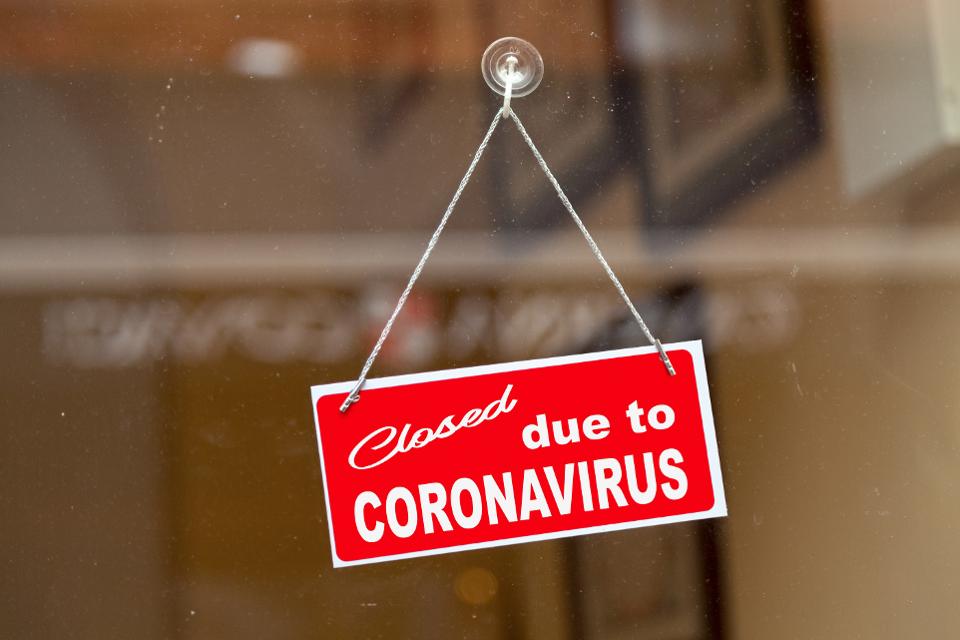
Most everyone agrees that life after COVID-19 will never be the same as it was before. Once the virus dies down, we won’t be rushing out to the beaches or the movies or to our favorite restaurants. Many businesses will have new safety precautions in place or might not even be open at all. The Corona Virus is not only a health crisis but an economic and market crisis as well, paralleling the great depression. This means that many small businesses won’t be able to recover from such a devastating financial blow, causing them to close their doors for good. The Corona Virus has impacted so many aspects of everyday life that it’s going to force us to adapt in a totally new way, especially in the business industry.
The process of adaptation will be anything but easy. With no vaccine coming for another year, companies are forced to make major decisions that will surely cost them even more money than they’ve already lost. Luckily, with America being one of the last nations to feel the direct impact of the Corona Virus, we can look to China as a model for our economy. “As china returns to work, Beijing has sought to reduce the transmission risk by requiring employers to check workers’ health and temperature daily, with quick quarantines for anyone showing symptoms” (Dou, 2020). Constant monitorization of workers will be a major part in halting the spread of the virus as we move forward. The implementation of PPE and safety measures across all businesses will also be crucial, including, “distributing masks and nagging employees to wash their hands” (Duo, 2020). These methods slow the spread of disease and stop the reemergence of another full-blown pandemic.
Along with the precautions that local businesses must adopt, local consumers must do their part to support these businesses as well. Already, the amount of restaurant owners expecting closure is staggering. “11% of more than 4,000 restaurant owners and operators surveyed by the National Restaurant Association (NRA) last week said they anticipate they will permanently close within the next 30 days…that would mean more than 110,000 closing for good” (Taylor, 2020). That is a horrifying statistic to imagine. Not only would thousands of businesses shut down, but millions of employees would lose their jobs. With the estimated “$25 billion in sales” (Taylor, 2020) lost from restaurant industries in the US alone, it’s easy to see why so many businesses are being forced into closure. So, as soon as restaurants and other local businesses can open again, consumers will need to support them, rather than large corporations who have a larger financial cushion.
Another major industry that faces collapse is the movie theater industry. “Industries that rely on people leaving their homes are most obviously at risk” (Sherman, 2020), says Alex Sherman from CNBC. “Theaters have successfully bobbed along over the last decade due to increased ticket prices and doggedly fighting against media companies who have toyed with the idea of releasing movies on television at or near the same time as theaters” (Sherman, 2020). Movie theaters have clearly been an at-risk industry for years, having to compete with online streaming sites and requiring people to leave their homes in order to go to the movies. With quarantine still seeming far from over, it seems that businesses will have to adapt to people staying at home. This means making accommodations for the now that could eventually become permanent. Theaters have already begun to release new movies online, ones that would have originally premiered in theaters. By releasing these movies online, the theater industry is testing consumer waters and trying to understand if they should release all movies online. Moving forward, this industry could change in a big way. To keep theaters open, consumers would have to show a willingness to attend in person movies rather than viewing them from their couch.
The main businesses that will be affected by Corona are small businesses, businesses deemed at-risk previous to Corona and businesses that require people to leave their home. Although, it may seem like these businesses could disappear forever, consumers can do a lot to stop that from happening. The market is in run by its consumers. They decide what they like, and businesses produce. Through active support of the businesses we love, we can give them the financial stability they need to remain open. So, if we want to see small restaurants, theaters and other companies stick around, we need to support them now more than ever. As long as businesses adopt proper safety precautions and receive support, the US economy will be able to recover and prevent the loss of millions of businesses.
References
Dernbach, B. Z. (2020, April 7). When it comes to coronavirus relief, some companies are both small businesses and big ones. Retrieved from https://www.motherjones.com/coronavirus-updates/2020/04/coronavirus-big-small-business-loopholes/
Dou, E. (2020, April 13). Five-step plan for reopening business is put to the test in China. Retrieved from https://www.washingtonpost.com/world/asia_pacific/five-step-plan-for-reopening-business-gets-a-test-run-in-china/2020/04/12/8c0bc17e-7acb-11ea-a311-adb1344719a9_story.html
Kost, D. (2020, March 20). How Small Businesses Can Survive the Coronavirus Outbreak. Retrieved from https://hbswk.hbs.edu/item/how-small-businesses-can-survive-the-coronavirus-outbreak
Sherman, A. (2020, March 16). Coronavirus could be the tipping point for movie theaters, gyms and other industries already suffering from disruption. Retrieved from https://www.google.com/amp/s/www.cnbc.com/amp/2020/03/16/coronavirus-will-most-hurt-industries-already-suffering-disruption.html
 English 110 Spring 2020 10:10-11:00
Tess, I found your piece very eye-opening. Even when the virus is “gone”, there will be long-lasting effects caused by the virus that remain. You brought up the movie industry, which I had not even considered. The mall near me was in the process of building a movie tavern before this all began, and I am curious to see if that will continue. My family has also tried to do what we can to help local restaurants by ordering from them instead of the chain restaurants. We are very grateful that my parents were able to keep their jobs and work from home, but it will be very devastating to see the effect this virus will ultimately have on the economy. Insightful piece, thank you for sharing, and I hope you and your loved ones are well.
-Elizabeth Pohle
LikeLike
Tess,
You brought up some really good points that i hadnt ever even thought about. Obviously we are all concerned with the economic state that this pandemic is going to leave all of us in, but how will we step forward? what first step are we going to take? As you mentioned, evolution will have a big deal in all of this. Even in businesses, survival of the fittest is prevalant. So many resturants have started to adapt to takeout and gyms going online. The way you talked about an already dying industy that is the movie theatre business. This point you brough tup eas very thought provoking because it brings up the question of whether this will mark the beginning of the end of that industry. Hope you are doing well!
great work 🙂
-caroline erlandsen
LikeLike