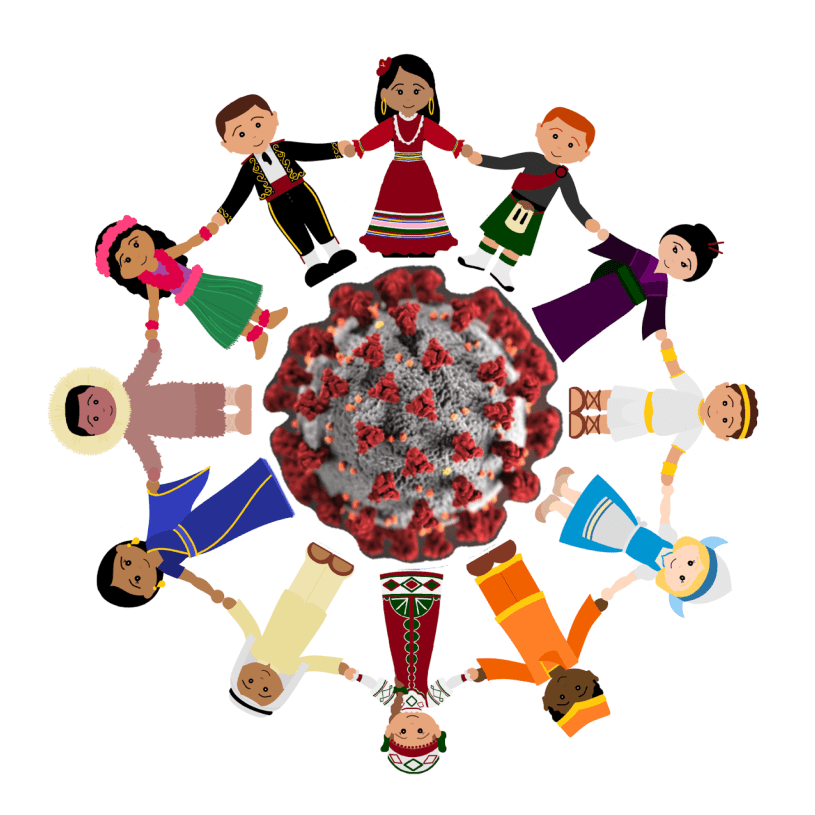
With about 172 million people under lockdown in the U.S. alone, I think it’s safe to say that we are currently practicing the world’s largest social experiment in history. While COVID-19 was not a controlled variable, its ancillary impacts and result will be studied for years, and forever alter the course of our society.
The onset of this pandemic made a mockery of life-as-we-know-it, thwarting all aspects of our daily routine. People everywhere were forced to forget all endeavors, whatever they may be, and trade them for a life of solitude in their homes. How are we supposed to cope with such a grand-scale change?
We didn’t. Well…we tried, however psychological impacts proved inevitable. Social isolation and loneliness have been linked with poor mental health through research time and time again. Recent data shows that “significantly higher shares of people who were sheltering in place (47%) reported negative mental health effects resulting from worry or stress related to coronavirus than among those not sheltering in place (37%),” (Panchal, Nirmita, et al.). Job loss and other economic challenges have also caused a rapid surge of declining mental health for the population.
Among the most common of these mental health barriers are “symptoms of psychological stress and disorder, including low mood, insomnia, stress, anxiety, anger, irritability, emotional exhaustion, depression and post-traumatic stress symptoms,” (Van Hoof, Elke). People everywhere are battling the sense of identity loss. The question, “Who am I?” continuously taking its circuitous route throughout the back of our minds.
This exact question is the rising action leading up to the climax of our story. Who are you? Who will you be during this pandemic? Who will you be after?
According to Shauna Springer, Chief Psychologist for Stella Center, if a potentially extended period of social distancing results in the loss of a productive role in society and extended isolation, “we can predict escalation of the very two risk factors that Joiner’s Interpersonal Model of suicide risk tell us we should be concerned about: thwarted belongingness and feelings of burdensomeness.” Unless we are aware of the helpless rage and initial shock that will incur. Unless we make it aware that psychological reactions are normal. Unless we address these challenges in a controlled and strategic way.
Though it is no easy task to remain analytical about the stress in our lives during a time of peak anxiety and sweeping change, sustaining a healthy mindset requires just this. Psychologists advise to “move our thoughts from fight-or-flight system into the highest plane of who we are,” (Springer, Shauna). We need to consider our deepest values and how we can make hard decisions for the good of all.
Being as the coronavirus is an unprecedented obstacle, the inability of institutions to cope has warranted “experimenting with a social innovation approach that rapidly brings together government, civil society, and the private sector,” (Gegenhuber, Thomas). One example of the sort is Germany’s first government-hosted crisis hackathon: #WeVsVirus, consisting of 26,000 participants. The effort was not only in attempt to produce viable and useful technical solutions, but also to empower thousands of different people to take action, learn, and create alongside others. Technology can’t replace the urgent, collective decision-making needed to discipline the host of social issues we face, however, “coalescing around a common cause stirs hope in and empowers people, and can lead to new and viable solutions that ease the burden of social crises,” (Gegenhuber, Thomas).
I want you to navigate back to the previous line and reread Gegenhuber’s quote. Duh—right? Isn’t it obvious that coming together as a unified group should ease the burdens to social change? Isn’t it obvious that the strength of one sole individual isn’t comparable to that of a group who stands together? “Yes!” the chorus bellows.
If that answer was always so clear, why did it take a pandemic for that sentence to be newsworthy? Why did it take a death toll for us to add validity to that statement? Consider these questions as you decide your stance on who you’ll be during this time…who you’ll be after.
As for who we were before—those people, they needed this virus. I wish it came without consequence— without loss of life, without a bruised economy—but sometimes consequence is the source of clarity. Because this virus, alongside all of its horror, has brought the spark of something, something that didn’t exist prior: a level playing field.
For once, even if it’s just for this little blip in time, we are the same. We are one. And thank Lord Jesus, we are beginning to unify. For once, no matter who we are, our socioeconomic status, gender, sex, race and all other attributes of identity put aside, we are facing the same battle. Coronavirus doesn’t care who you are, and in this ‘Corona-World’ of spring 2020, neither does anyone else.
So I hope for that previous version of us, this is a time of genuine self-reflection. I hope we can all be honest with ourselves about the mistakes we’ve made in the past in terms of social relations, and see clearer now, where we should head in the future. I hope as we reap these benefits of standing-together that we remind ourselves we must continue to sow. And Dear Lord, I’m not even religious, but I am praying that the people we have become, as we emerge from this pandemic will remember that single thread on hope we held onto, produced solely by simply forgetting our differences. We must retain the mindset that we are all equals despite our personal struggles, and strive to live for the harmony of all instead of in the selfish pursuit of personal gain at the expense of others.
Works Cited
Gegenhuber, Thomas. “Countering Coronavirus With Open Social Innovation (SSIR).” Stanford Social Innovation Review: Informing and Inspiring Leaders of Social Change, 29 Apr. 2020, ssir.org/articles/entry/countering_coronavirus_with_open_social_innovation#.
Panchal, Nirmita, et al. “The Implications of COVID-19 for Mental Health and Substance Use.” The Henry J. Kaiser Family Foundation, KKF, 21 Apr. 2020, www.kff.org/health-reform/issue-brief/the-implications-of-covid-19-for-mental-health-and-substance-use/.
Springer, Shauna. “The Psychological Impact of COVID-19.” Psychology Today, Sussex Publishers, 24 Mar. 2020, www.psychologytoday.com/us/blog/free-range-psychology/202003/the-psychological-impact-covid-19.
Van Hoof, Elke. “Lockdown Is the World’s Biggest Psychological Experiment – and We Will Pay the Price.” World Economic Forum, 9 Apr. 2020, www.weforum.org/agenda/2020/04/this-is-the-psychological-side-of-the-covid-19-pandemic-that-were-ignoring/.
Emma Charles
 English 110 Spring 2020 10:10-11:00
Hi Emma! I really enjoyed reading your blog post. One huge idea that stood out to me was all the statistics you provided. More specifically, your opening sentence. “With about 172 million people under lockdown in the U.S. alone, I think it’s safe to say that we are currently practicing the world’s largest social experiment in history. ” I never really realized how many people are truly in lockdown mode all over the world besides myself. Your piece let me see that so many people, not just NY or NJ, are living through this and some people are at worse conditions than others.
Alexis Lichten
LikeLike
Emma, just as you portrayed to me recently, I also always look for your posts. They are always interesting and intuitive, offering a range of transitions, comparisons, and deep thought. With this piece specifically, I really appreciated your topic of mental health in the midst of everything. I wrote my piece on that as well so it was nice to read something in a similar realm.
I admire your citations and how you used them to bounce your own ideas and words off of, and I became enticed when I read your ninth paragraph, ending with ‘”Yes!” the chorus bellows”. This portion of your writing really allowed for reflection of my own thoughts and feelings, along with that of others and how now more than ever it is important to support one another in any mental state we may hold and push through this together.
This is not an easy time for anyone, and for some, mental health is playing a larger role than expected. I know that especially where we are in our collegiate careers it is very easy to become even more stressed, and that is something I have experienced as I question my path and what I want to do. I try to remind myself that we can only take things day by day, and that is what I am trying to do not only in terms of school and the pandemic, but also my own thoughts and emotions.
Thank you for such an intriguing piece Emma, stay healthy and stay safe!
LikeLiked by 1 person
Emma, your writing is so powerful and love the direction you took with this assignment. I completely agree with everything said especially, “We must retain the mindset that we are all equals despite our personal struggles, and strive to live for the harmony of all instead of in the selfish pursuit of personal gain at the expense of others.” You couldn’t have phrased this more perfectly. We are able to move on past this pandemic and act like nothing happened or we can unite and feed off each others differences to create a better society. During this time its hard to better yourself but you make a great point that it is the perfect time to do so. I really enjoyed your writing.
LikeLike
Emma, I can’t say enough how much I enjoyed reading this. I loved how your introduction of how the whole world is topsy-turvy, and everyone everywhere had to change every aspect of their usual lives, emphasizes your point later on that it leveled the playing field. All people in America are going through the same sucky thing, and like you said “… thank Lord Jesus we are beginning to unify.” I also loved how personable this piece was, statements like “I want you to navigate back to the previous line and reread Gegenhuber’s quote. Duh—right?” and ‘“Yes!” the chorus bellows,” are really engaging and make your writing even more pleasant. In short, I really enjoyed this, and I thought this was a really great and really smart piece of writing.
LikeLike