
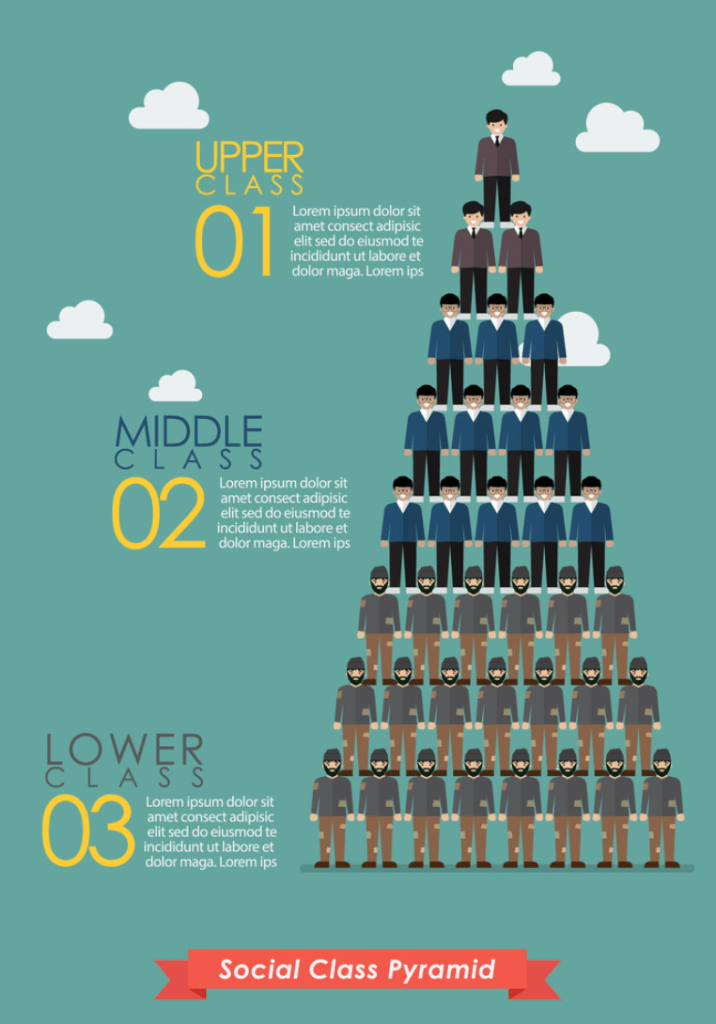
Over the last 150 years, using social class to define individuals and groups of individuals have set the tone for status, power, and ability to influence within the economy. Poor, lower middle class, middle class, upper middle class, and the wealthy. Five groups, five classes, defining the 3.3 million people living in the United States. In my opinion at least, most of the population derives from the middle working class, and while some may be higher up on the totem pole, and others lower fighting to survive, we are all here in this country, depending on the economy for sustainability, resources, and support. My question is, how could individuals’ placement within these social classes impact the economy of the United States ?
I proposed this question to five students here at the University of Delaware, where, just as in any other environment, there is a range of individuals within varying social classes, possessing different opinions on views regarding the economy. To begin the conversation, one student exclaimed, “the upper class is pushed to open businesses and pay for people to do stuff for them while the majority of society is providing for them.” A general, yet dense statement, her words confirmed the notion that the lower and middle working classes are struggling even further in order to support the success of those higher and wealthy. While this may not be the favorable opinion of everyone, I think it most definitely allows for reflection. Another student responded in further detail, emphasizing the idea that, “…some people want to pass along the wealth they don’t need while others think it’s rightfully theirs. Regardless, every individual in every economic class decided how much they contribute to the economy outside of the federally mandated requirement.” This student imparticulary, brought in the idea of the government and the parties who hold responsibility for decision making of the people; the differing views on economy and the people within it are impacted by the “clear divide” of the democracy we live in. In concluding the conversation, the last student stated and supported recent responses in saying, “people in the upper middle class and wealthy don’t worry as much about people who are poor or lower in the middle class since money isn’t a second thought to them. People of lower class are constantly worrying about the economy since they don’t have the financial stability others have.”
As an individual in a family of the lower middle working class, I fully understand the responses and opinions given by these three students. While each student answered my question perhaps not directly, but using their ideals on the economy, I believe they did so efficiently and allowed for a final conclusion; those who are more financially stable are able to contribute more to the economy, allowing for further growth, development, success. In contrast however, I believe that those who struggle to support themselves in different aspects will not only be able to contribute little to the economy, but be left behind in terms of economical advancements.
By: Toni Abdy
 English 110 Spring 2020 10:10-11:00